
The next time you wind your way along the sunny switchbacks of the Overlook Trail, you may spy some conspicuously non-tree additions to our living plant collections. On one exposed patch of soil, knee-high starts of milkweed and coneflower sway bravely in the summer sun. These small plants, often valued for their pollinator impact, are serving a new role here: they are part of a vast initiative to monitor atmospheric pollution across the country.
This year at Hoyt Arboretum, in partnership with NASA and the National Center for Atmospheric Research (NCAR), we planted the Pacific Northwest’s first Ozone Bioindicator Garden, providing critical air pollution data in our region and filling an important gap in the national map. This is yet another example of Hoyt’s presence in collaborative research, and underscores one of the things I love most about this place: how it reinforces my connection to home while also linking me to vibrant networks of global conservation.
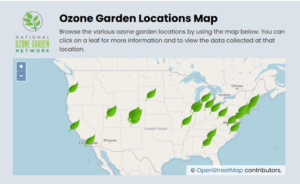
What is an Ozone Bioindicator Garden?
Essentially, it’s what it sounds like: a garden that indicates the presence of ozone. But if your knowledge of ozone mostly consists, like mine did, of the necessity of wearing sunscreen in New Zealand, you may still be curious about the science behind the project.
Recently, I joined HAF volunteers for a presentation by Justin Coughlin, a biogeochemist helping spearhead Hoyt’s Ozone Garden project alongside our staff. He shared his research and knowledge of atmospheric pollution and its effects on ecosystems, as well as promoted the tangible impact of community science on national regulatory policies.
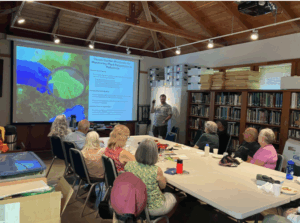
With Justin, I learned that ozone plays a beneficial role in the stratosphere by shielding us from UV rays, but becomes harmful when found in the lower troposphere, where life on Earth breathes. Tropospheric ozone naturally occurs from wildfires, lightning strikes and stratospheric intrusions, but can reach critical levels as a result of anthropogenic (caused by humans) pollution. Tropospheric ozone not only harms human health (asthma, respiratory issues, etc.), but can also damage plant cell structure, decrease CO2 sequestration in ecosystems, diminish crop yields, and can disrupt biogeochemical cycling in our soils and streams.
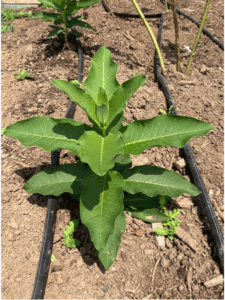
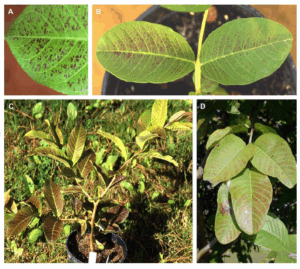
Ozone Bioindicator Gardens contain plants that are particularly susceptible to ozone damage. Here at Hoyt, we’ve planted common milkweed (Asclepias syriaca) and cutleaf coneflower (Rudbeckia lacinata), both natives to North America (but not to the PNW). Ozone damage to plant cells is visible to the naked eye as dark spots or “stippling”, so by simply observing and recording changes in leaves, we can contribute to air pollution science.
Community Science, National Impact
While ozone levels can be monitored by local air monitoring stations (such as those maintained by Oregon DEQ) and by satellites such as NASA’s TEMPO (Trophospheric Emissions: Monitoring of Pollution) satellite, ozone gardens serve as an important ground-truthing check on these methods. They also remind us of the very real, very visible effects of seemingly invisible processes, like tropospheric ozone levels, which appear as accumulated damage in plant leaves.
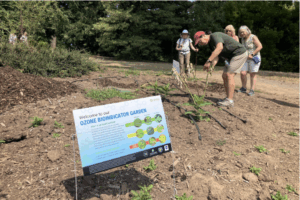
Perhaps most importantly, though, these gardens involve community members like you and me in research that is critical to both our region and planet. Community science creates a more robust dataset and a more informed, engaged public, all in one. By leaning in and taking note of stippling on a milkweed or coneflower leaf, we become more knowledgeable about ecosystem-atmosphere interactions and invested in finding durable solutions – all while providing real data that is used by policymakers at the national level.
Projects like these remind me of the power of collective observation and the insights we gain when we pay attention to plants. Complete our volunteer interest form online if you’re interested in staying in touch about future opportunities to participate in community science projects at the Arboretum.
About the Author
 Kate Nootenboom first joined Hoyt Arboretum Friends as a Nature Educator in the fall of 2024 before stepping into her current role as Membership & Administration Coordinator in June of 2025. Raised here in Portland, she finds comfort and wonder along Hoyt’s trails and loves sharing that joy with visitors of all ages. Kate holds a BA in Geology from Carleton College, and spent several years restoring prairie habitat in the Great Plains before returning to the trees. These days, you’ll find her attempting long-distance bike trips, being a devoted cat aunt, and obsessing over her sidewalk strip garden.