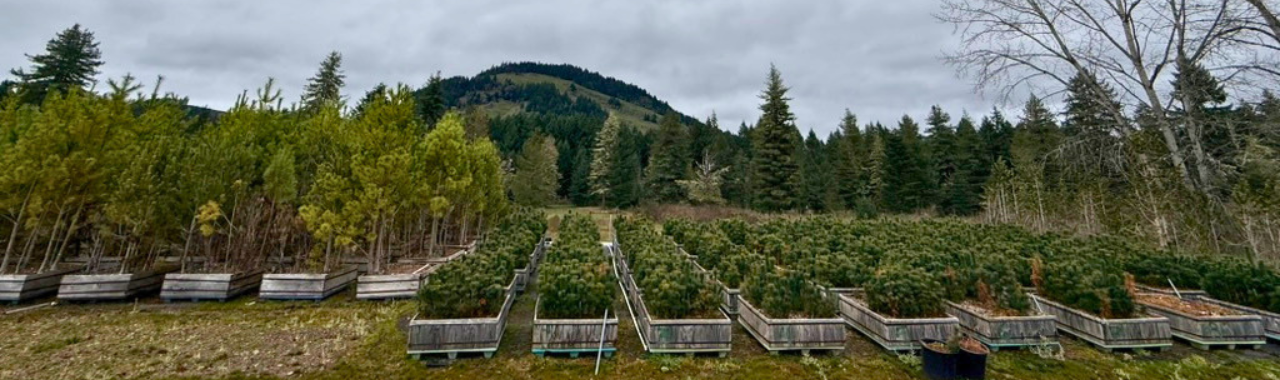
Building Resistance 1,000 Trees at a Time

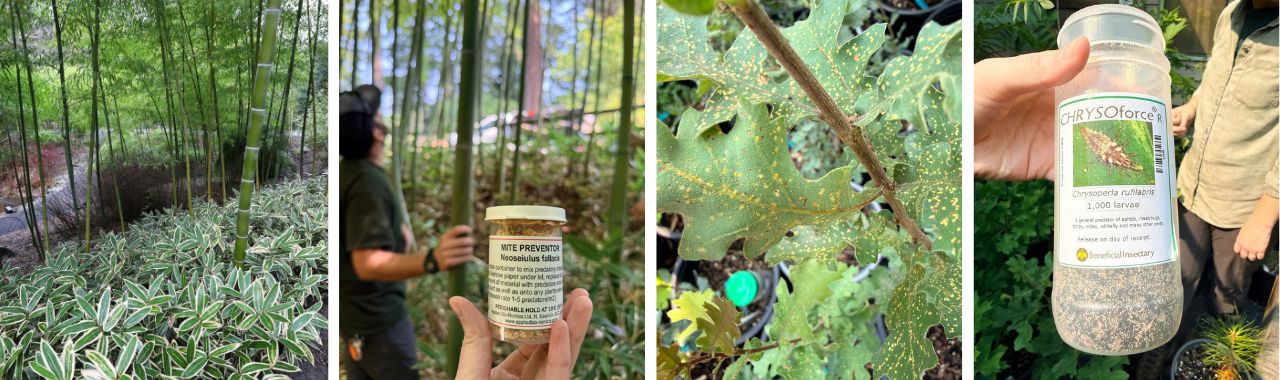
On a recent visit to the Dorena Genetic Resource Center near Cottage Grove, Hoyt Arboretum staff stepped into one of the country’s leading quantitative resistance research facilities and saw, firsthand, how science is helping forests keep pace with fast-moving threats. What’s happening at Dorena isn’t abstract. It’s hands-on, large-scale, and urgent. What Is Quantitative Resistance? … Read more

Witch Hazels at Hoyt Arboretum

At Hoyt Arboretum, our trails are more than paths through the forest—they’re galleries in a living museum, where trees and shrubs are thoughtfully arranged like exhibits. And this time of year, the Witch Hazel Exhibit steals the show as their signature, spidery flowers begin to unfurl. Some Botanical Background Witch hazels (Hamamelis) are full of … Read more

Inside the Nursery: Foxtail Pines & Conservation

If you were to sneak a peek into Hoyt Arboretum’s maintenance yard, the first things you’d notice might be the practical signs of a working natural area: tightly packed work trucks, shelving stacked floor-to-ceiling with shovels, rakes, pruners, and handsaws, bins of organized work gloves, and everything necessary for everyday stewardship. But—past the tools and … Read more

The Best of Winter at Hoyt Arboretum

As Winter sets in, Hoyt Arboretum takes on a more somber cast. The bare branches of deciduous trees jut harshly into grey skies, unadorned by soft leafiness. Clouds and mist often obscure the views, making even nearby trees nothing but ghostly outlines.  Precipitation falls, trails get muddy, and the chill can nip at your nose.

But properly prepared, with the right layers of insulation and water-proofing, the Winter scene at Hoyt Arboretum still holds much wonder to discover and beauty to behold by the intrepid adventurer. 

Lichens

Lichens cover almost everything in the Pacific Northwest.  What appears to be moss on a tree is often actually lichen, a symbiotic organism involving fungus hosting photosynthetic algae and/or cyanobacteria.  Lichens can add splashes of color to a dull and dreary day.  Crustose lichens grow on rocks and tree trunks, and come in many colors.  Look for frilly neon-green fruticose lichens on branches.  Big, green, leafy Lobaria oregana goes by the names of lettuce lichen and Oregon lungwort.  It is a foliose lichen that grows high in trees, but can often be found on the forest floor, especially after a windstorm.

Lichens come in many colors and can be useful indicators of forest health.

Read more

Web Design by Watermelon Web Works
Skip to content