
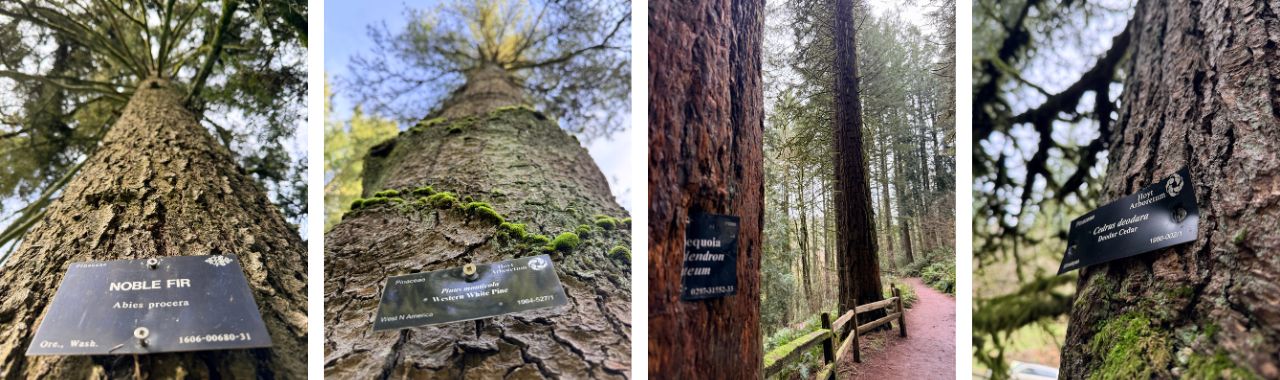
I firmly believe that trees are more than landmarks; each one carries its own significance on earth. As a certified tree hugger, I grew up surrounded by tropical trees and had no trouble identifying them from a young age. But when I walked the trails of Hoyt Arboretum for the first-time last November, I was overwhelmed by the sheer variety of species — many completely new to me.
As a Trail Rover in training, I shadowed Tom, an experienced Trail Rover who knows the Arboretum like the back of his hand. Volunteers like Tom can identify most plants and trees at a glance. Bark patterns, leaf shapes, blooming seasons, and even the location of a tree on the trail are second nature to them. Meanwhile, as an amateur, I found myself stopping at every tree, reading the tag, taking photos, and checking them repeatedly. That is when I started noticing patterns and differences in the leaves, and soon enough I could spot and name some trees along the trails.
So, if you are like me, new to the Arboretum trails this winter and want to learn more about the trees around you, here is a quick intro to how I first learned to identify four distinct conifers.
Did I Say ‘Leaves’ in the Winter?
Depending on the species and the season, a combination of twigs, buds, flowers, cones, fruits, bark patterns, and leaves can help you identify a tree. But does that still work in winter?
Most deciduous trees — the ones that shed their leaves in autumn to conserve energy and water — stand completely bare, leaving the trails carpeted in their leafy confetti. It is natural to wonder whether leaves can still help you at this time of year.
The answer is ‘yes’ — if you are walking through a living museum of trees that includes the region’s largest collection of evergreen trees (trees that retain their green leaves year‑round) offering plenty of clues even in the heart of winter.
Welcome to My Winter Guide
Here is a small collection of my winter favourites, along with some quick pointers for identifying them at Hoyt Arboretum during the winter months.
Explore all four of the trees along the following route highlighted on the map below. Starting from Stevens Pavilion, take Fir Trail to Bristlecone Pine Trail to White Pine Trail to Wildwood Trail and loop back on Redwood Trail. The tree stops are denoted by red map markers and the corresponding numbers to the trees listed in this post.
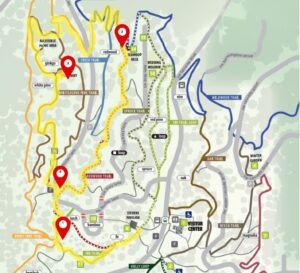
1. Noble Fir
As you walk along the Fir Trail near the intersection with Redwood Trail, you may spot some trees that resemble a classic Christmas tree — a perfect conical shape with sturdy branches strong enough to hold even your heaviest ornaments.
Look for these features:
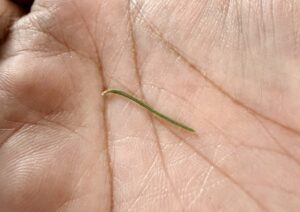
Needle‑shaped leaves bent at the base, like tiny hockey sticks.
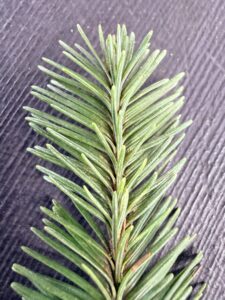
Blunt‑tipped, stout needles about 1.5 inches long.
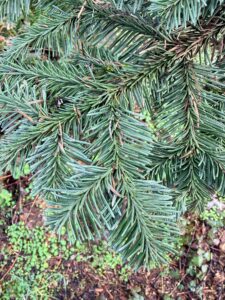
Bluish‑green leaves with whitish stripes.
If all three apply, you are likely looking at a noble fir (Abies procera), a true native of Oregon and Washington. These majestic trees can grow up to 100 feet tall.
IUCN Red List Status: Least Concern
2. Western White Pine
Along the Bristlecone Pine Trail, near the Stone Circle on the Arboretum map, you may notice a beautiful pyramid‑shaped tree spreading its horizontal branches above and across the path.
Look for these features:
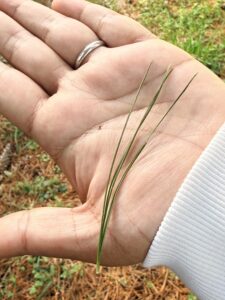
Soft needles about 4 inches long.
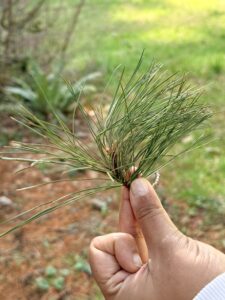
A lighter green tinge to the foliage.
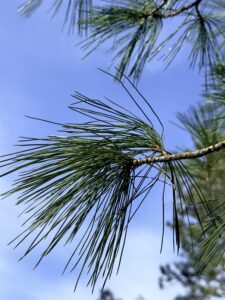
Needles growing outward from the stem in soft, brush‑like clusters.
If these features match, you have found the western white pine (Pinus monticola). The species epithet ‘monticola’ means ‘mountain dweller’. This tree is also known as soft pine or white pine, and its cones are noticeably larger with flat outward scales, as compared to those of its close relative the eastern white pine (Pinus strobus), which you can also find along the same trail. Check for tree signs to confirm identification in this area of the collection.
IUCN Red List Status: Near Threatened
Primary Threats: White pine blister rust, pole blight, bark beetles, fire, and competition from other species.
3. Sierra Redwood (the Giant Sequoia)
The Redwood Trail and Redwood Deck are beloved landmarks at Hoyt Arboretum. As you continue past the deck, towering giants with red, brown, and cinnamon‑coloured barks rise on either side of the trail. Among them, you may find the Sierra redwood (Sequoiadendron giganteum).
Look for these features:
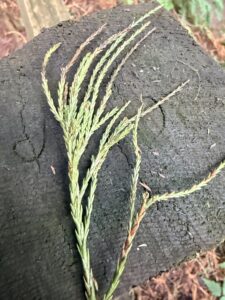
Short, 3–6 mm triangular, sharp leaves tightly wrapped around the twigs (awl leaves). You may need to locate these on the ground around the tree.
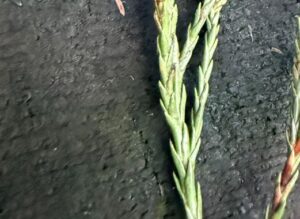
Leaves shaped like tiny drill bits — broad at the base and tapering to a sharp point.
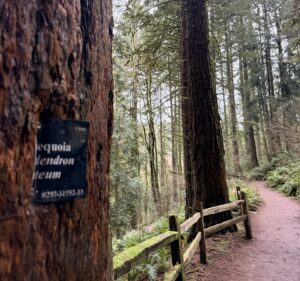
Cinnamon‑brown bark that is significantly thicker and more massive than that of the dawn redwood or coast redwood.
I chose to feature the Sierra redwood in this edition instead of the highly popular dawn redwood. The dawn redwood enjoys Oregon’s state fossil status and is well protected. Although Sierra redwoods are widely cultivated and many grow in protected areas, their endangered status reflects the dramatic loss of old‑growth forests and could benefit from the added awareness and attention.
IUCN Red List: Endangered
Primary Threats: Historical logging, habitat loss, and wildfires.
4. Deodar Cedar (Himalayan Cedar)
A little beyond the Bamboo Forest, along SW Fischer Lane, you may come across a cluster of deodar cedars (Cedrus deodara). These true cedars have a distinctive tiered appearance.
Look for these features:
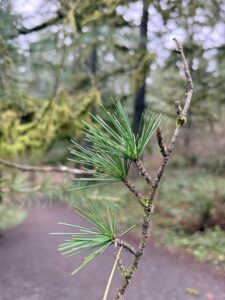
Densely clustered leaves (15–20 needles) arranged in whorls on short spurs.
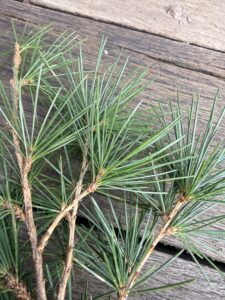
Soft, flexible needles about 2 inches long with pointed tips, spirally arranged on the shoots.
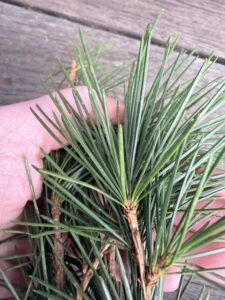
Dark green needles with a bluish tinge that feel slightly waxy to the touch.
Native to the Himalayas, the name ‘deodar’ comes from the Sanskrit phrase meaning ‘wood of the gods’. In northern India, this sacred wood has long been used in the construction of temples, which makes this tree especially meaningful to my heritage and nativity.
IUCN Red List: Least Concern
Until Next Season’s Walk
Many of us assume that identifying trees requires being a botanist, but all it really takes is curiosity, observation, and a love for nature. I hope this winter guide makes tree identification at Hoyt Arboretum easier, more exciting, and sparks a deeper appreciation for the trees around us. When we learn their names and begin to recognize their forms, we strengthen our connection to the natural world. May this be a small step in rekindling that relationship.
A heartfelt thank‑you to Mandy Tu, our Plant Taxonomist and Herbarium Curator, for taking the time to walk the trails with me and helping me see these trees in a whole new way throughout my learning journey. And thank you to Rebekah Golden for her thoughtful editing and valuable suggestions in bringing this winter edition of my favourite trees to life.
See you again next season!
About the Author
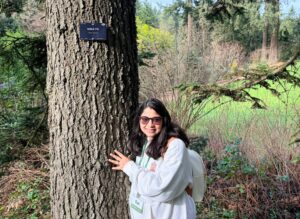 Sailatha Theagaraj (she/ her/hers) is a recent volunteer at Hoyt Arboretum, having moved to the region not long ago. Sai holds a Master’s degree in Environmental Science and Technology and brings global experience in environmental sustainability, sustainability consulting, green building certifications, and circular economy work. She has led sustainability initiatives for major infrastructure projects and has trained many professionals in environmental sustainability practices. Her favourite places in the Arboretum are the Conifer Collection and enjoying a quiet moment at the Stevens Pavilion, listening to the surrounding sounds of nature. She is passionate about conservation, sustainability education, and environmental awareness.