
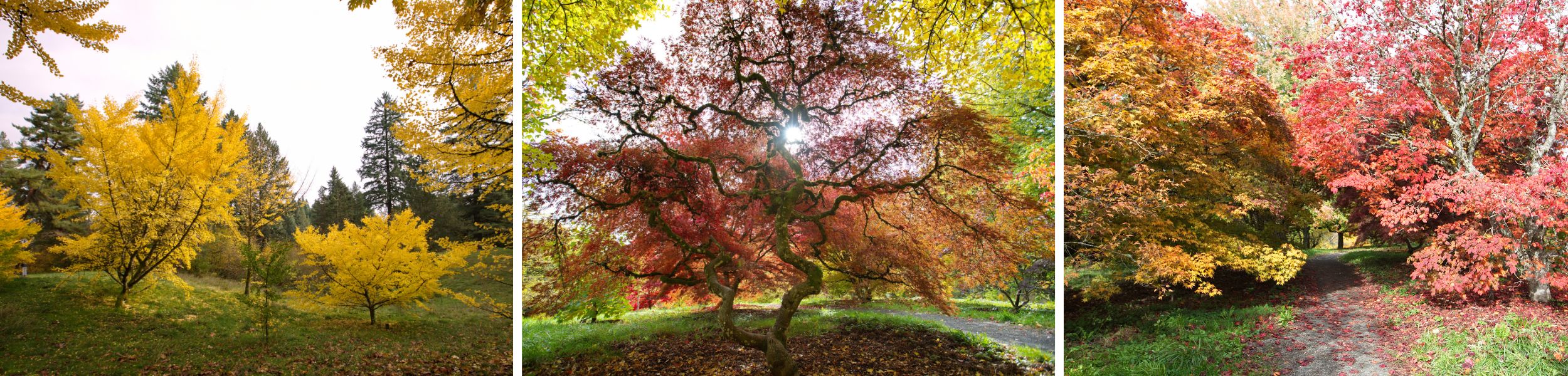
Fall color can come on quickly at Hoyt Arboretum, and each year is a little different. While temperature, light, and rainfall all influence how and when leaves change, you can expect the landscape to shift into its most vibrant hues throughout October.
As you explore, don’t miss our nationally accredited Maple Collection, which puts on a particularly dazzling show each fall, mostly along Maple Trail. But, the Arboretum’s color palette goes far beyond maples—broadleaf deciduous trees from across the globe bring a rich variety of golds, crimsons, and coppers to our trails.
Fall Color Watch 2026
Starting on the fall equinox, September 22, 2026, we’ll be posting weekly updates of the best places to see fall color at Hoyt Arboretum.
Follow along as we highlight one great spot each week to enjoy autumn’s beauty.
October 19, 2026
Springtime strolls through Hoyt Arboretum’s nationally-accredited Magnolia Collection are a bit of a Portland tradition, but this part of the Arboretum is largely underrated the rest of the year. While magnolias themselves don’t offer much in the way of fall color, their large leaves are fun to pick through and explore as they scatter across the hills and trails.
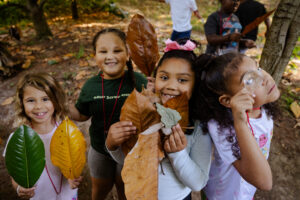
Continuing up the Magnolia Trail switchbacks toward Wildwood and Overlook Trails, the fall colors unfold in impressive displays from the sassafras and sweetgums (great band name). Take it all in from the bench at the first switchback.
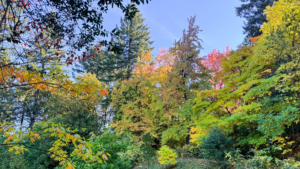
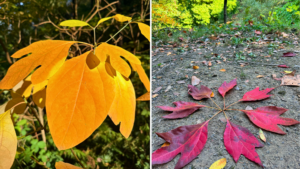
Sassafras, (Sassafras albidum) are in beautiful transition from green to orange to red.
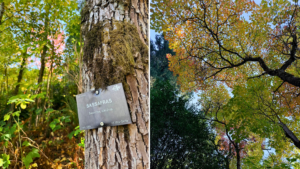
Further up the switchback, the lovely pinks of sweetgums (Liquidambar styraciflua) starts to peek through, and as you reach the top of the trail at Upper Cascade Dr, a showstopper sweetgum is coming into its full red.
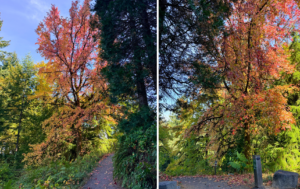
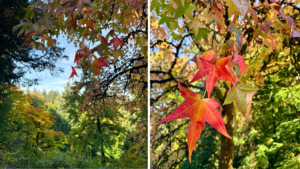
Make sure to pause at the top and take in the full scenery! And if you have more walking in you, continue onto Wildwood or Overlook Trail for some more beautiful fall foliage!
October 12, 2026
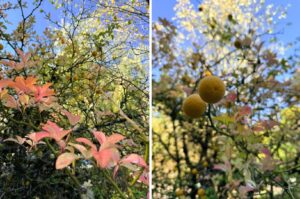
Fall is taking over in the Arboretum, and however you enter the Arboretum, the colors of the season beckon and welcome. Colorful displays are not restricted to the trails, and the lot adjacent to the Visitor Center on Fairview Blvd. looks more like a paradise than a parking lot. Standouts include trifoliate orange (Citrus trifoliata) which fruits as the leaves color, and Vitis californica ‘Rodgers red’ (grape!).
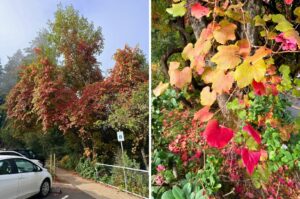
Fall colors are easy to find beyond the parking lot in any direction this week, but a little hike through the Holly Loop, onto Wildwood, across Knights Blvd, and down the stairs connecting to Maple Trail, a most fantastic display awaits.

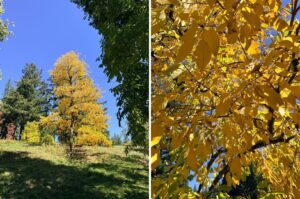
Going toward Wildwood to the right of the base of the stairs the walnut collection is beginning to yellow while dropping nuts. The Arboretum’s squirrels can be found working on the tough shells for long stretches without scampering off.
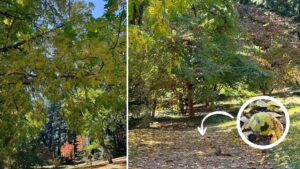
And through the yellowing walnut leaves, is a lovely fall “sit spot” near some Franklinia alatamaha.
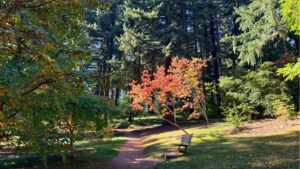
This species is extinct in the wild, and only grows in cultivation. Its leaves turn lovely red at the same time as big, white waxy blooms appear on the branches.
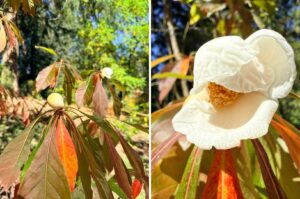
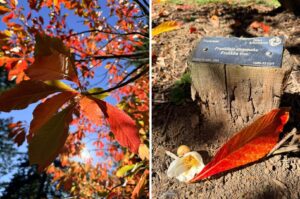
Heading back towards Maple Trail, is like entering a kaleidoscope tunnel of black tupelos (Nyssa sylvatica).
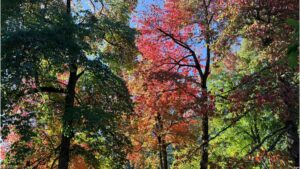
The tupelos are beautiful overhead and up close. The smaller trees planted in the collection have turned fall color earlier than some of the larger trees that are still in transition from green to bright red, and some of the larger trees have little round fruits forming on stalks in the foliage.
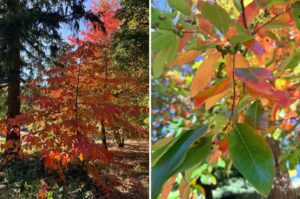
Also of note in this section of trail is common persimmon (Diospyros virginiana).
October 5, 2026
The first weekend in October presented idyllic fall color on the south slope of the Arboretum. As you round the corner from Overlook Trail where it meets Hawthorn Trail, the view of the Maple Collection above is a breathtaking mixture of fiery color and texture with the “sentry maple” beckoning near.
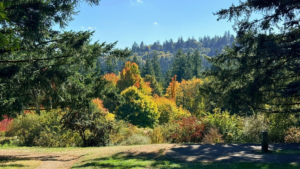
Further down Overlook Trail, the Ash Collection is in their full and final display of color above Kingston Dr.
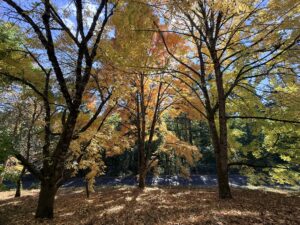
There are many species of ash (Fraxinus) in the Arboretum that change with the fall at different times. Some have already peaked and lost their leaves, while others are in their full glory, and others yet are still just yellowing. Species include Fraxinus pennsylvanica, Fraxinus americana, Fraxinus ornus, Fraxinus latifolia, and many others including garden cultivars.
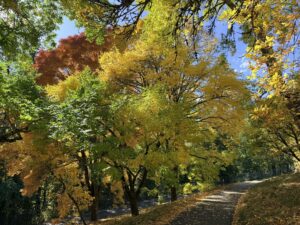
Continuing onto Maple Trail from the Overlook Trail to the east, the birch are nearing full splendor, with Betula alleghaniensis, or the yellow birch looking particularly spectacular.
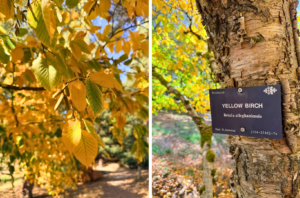
Continuing east down Maple Trail, Acer saccharum ‘Newton Sentry’ marks the heart of the Maple Collection.
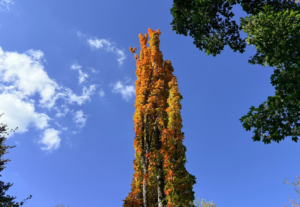
An old cultivar of the sugar maple, its original discovery is from 1885 at the entrance to Newton cemetery in Massachusetts. Its upright form gives an impressive display of fall color with a gradient from green at the base to orange at the top.
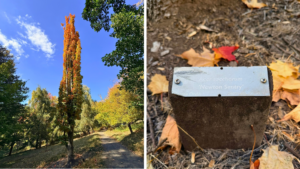
Continuing along Maple Trail and around the bend connecting with Walnut Trail, there is a section of incredible, small-growing maple cultivars including several Japanese maple varieties which are just beginning to color up. This week, however, the Korean maple, Acer pseudosieboldianum subsp. takesimense, is particularly stunning in its transition from green to BRIGHT red.
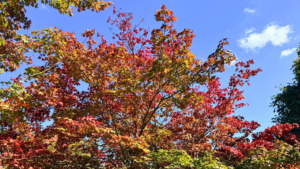
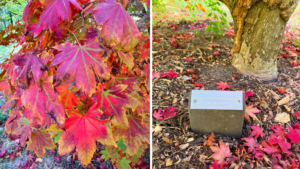
Following Walnut Trail on the upslope and branching onto Hawthorn Trail, the American smoke tree, or Cotinus obovatus is a blazing beacon up the hill where Hawthorn meets Wildwood Trail.
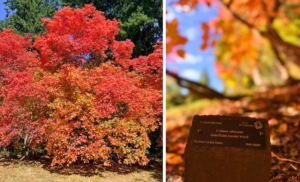
Divert slightly off trail and get close to observe this show-stopping tree.
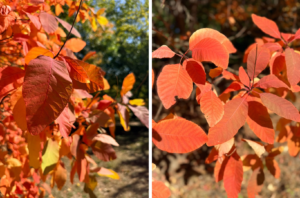
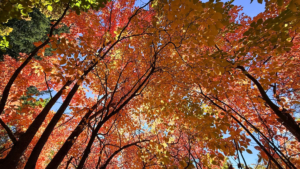
Crawl under its protective branches and look up for a stained-glass like experience of blazing color.
September 28, 2026
While fall colors continue to develop in the broadleaf collections on the south side of the Arboretum, the native trees and shrubs in understory of the Conifer Collections on the north side are quite colorful.
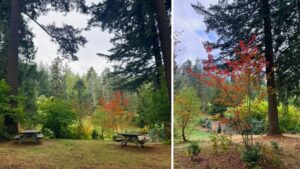
And with seasonal rains starting last week, there were still fall colors to be seen from under the protective cover of Stevens Pavilion.
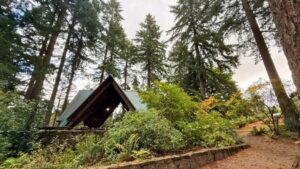
And for the sunny days (or if you don’t mind getting a little wet!), the Geographic Collections on Bristlecone Pine Trail include many broadleaf tree species known for their fall foliage.
Starting from the Bristlecone Pine Trailhead near the Creek Trail connector off Fischer Ln, the understory is where you’ll notice your first glimpses of the fiery season from vine maples and bigleaf maples.
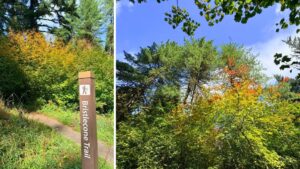
Following the dirt trail trhough switchbacks from this point, you’ll notice many leaves underfoot, including the impressive bigleaf maple leaves. Once you start spotting them on the ground, you’re likely to find their source from small copses of these native trees all along the trail.
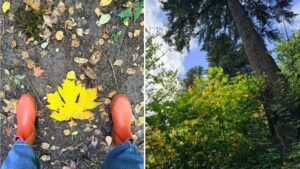
And when you reach the Bristlecone Pine Trail Picnic area, you’re in for a special treat as the Japanese maple, Japanese beautyberry, and ginkgos are all starting to turn.
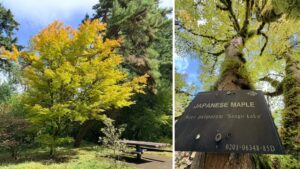
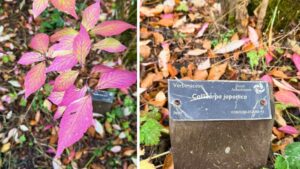
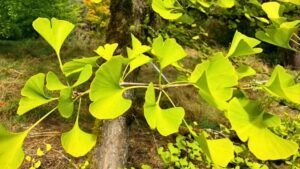
Fall colors are just beginning in this area, but the shifting hues and mixed textures of this section of the Arboretum are undeniably beautiful. This won’t be our last fall feature for the Bristlecone Pine Trail!
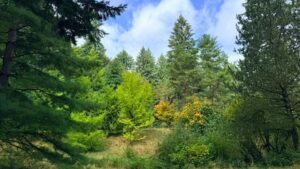
September 22, 2026
Fall colors have been starting to show for a couple of weeks now, mostly in the native understory, with some vine maples along Bristlecone Pine Trail that began turning orange in late July.
There are hundreds of native vine maples, Acer circinatum in the understory throughout Hoyt Arboretum, and many are just beginning to show their fall color transition.
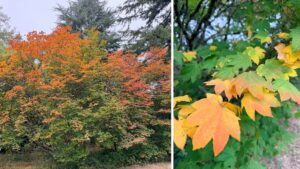
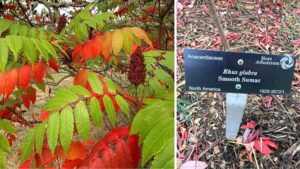
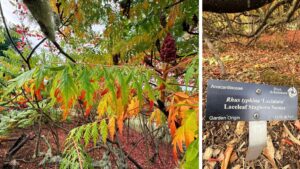
Continuing down Hawthorn Trail, toward Maple Trail proves that collection trees are beginning to turn as well. The sumac (Rhus) collection is especially eye catching as they transition to red.
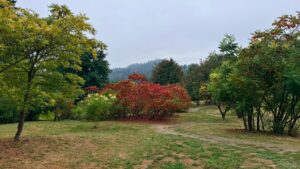
The sumac collection contains 8 types of Rhus planted in the same copse. Get close to check them out. Clumps of different species and cultivars can be identified by tree signs on posts in the ground.
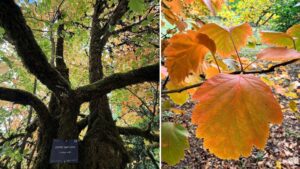
Continuing down toward Maple Trail, you’ll notice this week that the Maple Collection is still mostly in its summer green. But, through the foliage, a lovely sunset orange/pink peeks through from the downy hawthorn trees just off and between Hawthorn and Walnut Trails.
Stay Up-To-Date with Hoyt Arboretum!
Subscribe to our email newsletter
AND