
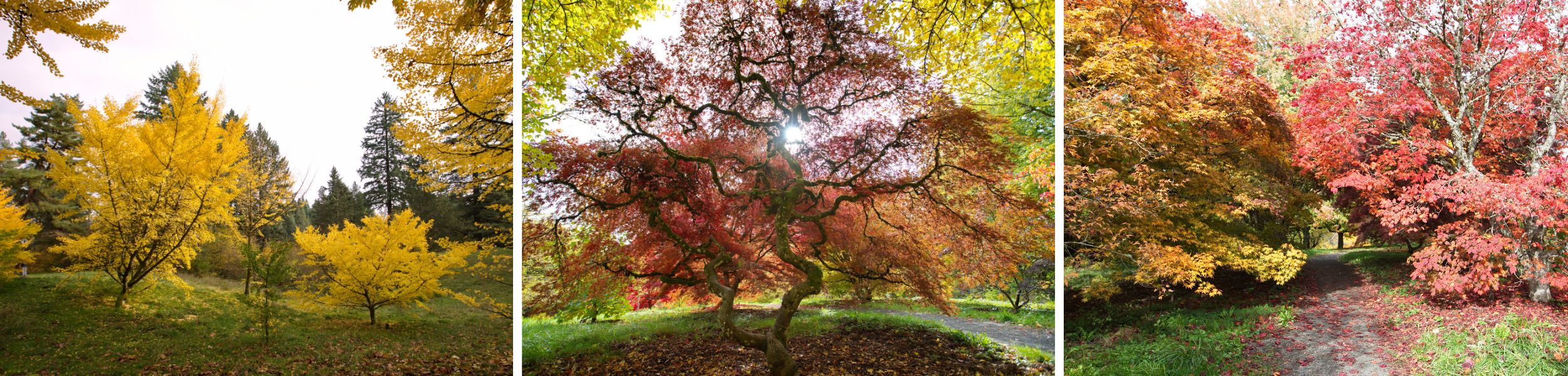
Fall color can come on quickly at Hoyt Arboretum, and each year is a little different. While temperature, light, and rainfall all influence how and when leaves change, you can expect the landscape to shift into its most vibrant hues throughout October 2025.
As you explore, don’t miss our nationally accredited Maple Collection, which puts on a particularly dazzling show each fall, mostly along Maple Trail. But, the Arboretum’s color palette goes far beyond maples—broadleaf deciduous trees from across the globe bring a rich variety of golds, crimsons, and coppers to our trails.
Hoyt Arboretum is home to more than 2,300 species of trees and plants from around the world, and while we can’t capture every splash of color, we’ll share standout places you won’t want to miss.
Follow along as we highlight one great spot each week to enjoy autumn’s beauty. Check back weekly for fresh updates, and let the season’s changes guide your next visit.
November 14, 2025
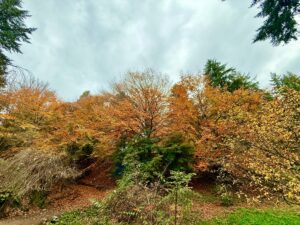
With shorter days, and rainy weather, most broadleaf trees in the Arboretum have lost their leaves, blanketing trail sides in browns, oranges, yellows, and reds. But, there are some broadleaf trees that are still transitioning into their fall color along Beech Trail.
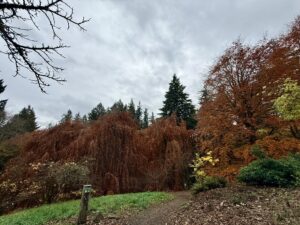
Fagus sylvatica ‘Pendula’, “European weeping beech”, Fagus sylvatica “European beech”, and Fagus orientalis “Oriental beech” line the trails from the main parking lot near the Visitor Center, parallel alongside the start of Overlook Trail, across Upper Cascade Dr, and onto Beech Trail.
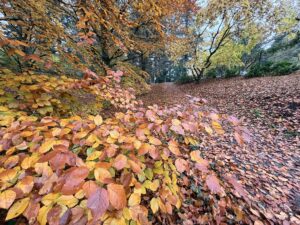
Further along Beech Trail and on the way to the Winter Garden, Fagus grandifolia, or the “American beech” is a beautiful gradient of green to fiery orange.
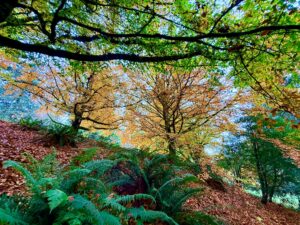
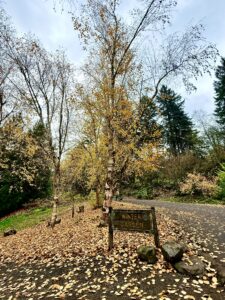
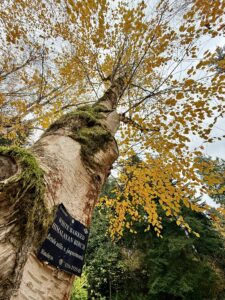
And as you reach the end of Beech Trail and Cross Upper Cascade to the Winter Garden, you’ll find the last of the yellowing birch leaves.
November 5, 2025
As November settles in, most of the Arboretum’s fall color has passed, but a special show is just beginning—Larch Madness, when deciduous conifers light up the landscape in golden hues.
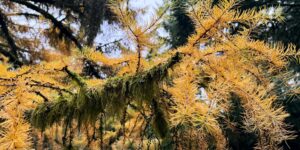
Hoyt Arboretum is home to 8 larch species in the genus Larix, including the native Larix occidentalis as well as Alaskan, European, and Japanese species that will light up landscapes through the tail end of fall.
Larches (Larix spp.) are a unique group of conifers that break the evergreen mold. Native to cool temperate and boreal regions across the Northern Hemisphere, they can be found from the high mountains of the Pacific Northwest to the vast forests of Siberia and the European Alps.
Unlike most conifers, larches are deciduous—they shed their soft, needle-like leaves each fall after turning brilliant shades of gold. In the harsh climates where they grow, this adaptation helps them survive extreme cold and drought. By dropping their needles, larches reduce water loss and avoid winter damage from frozen soil and desiccating winds. Come spring, fresh needles emerge in bright green clusters, ready to capture sunlight through the long days of the growing season.
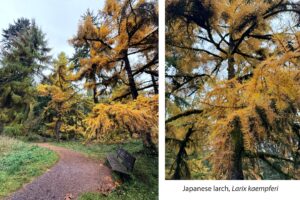
In particular, the Japanese larches at the intersection of Redwood and Fir Trails west of the Bamboo Forest are vibrant this week and a must-see.
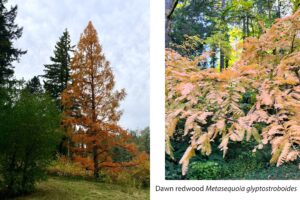
But larches aren’t the only deciduous conifers worth seeing this week. Dawn redwoods, are a fiery orange in many places around the park including Wildwood Trail, Bristlecone Pine Trail, Redwood Trail, and more.
October 30, 2025
It’s been a little gray and gloomy this week, and the early-coloring trees like ash and birches are a bit bare as of today, but we’re happy to report that the most-anticipated Japanese maple of the season is officially at peak color. Acer palmatum ‘Ornatum’.
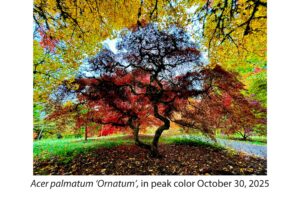
In the area surrounding this “Tree of Life”, at the intersection of Walnut, Hawthorn, and Maple Trails, all of the Japanese maples are exquisite, and the overlapping colors and textures around the trail are in full beauty.
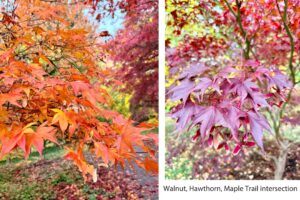
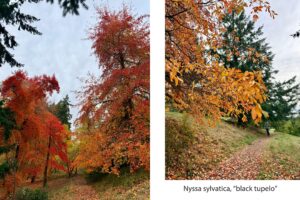
Continuing along Maple, to Overlook, and across Kingston Blvd, the highlight of the week are the gorgeous Nyssa sylvatica, “black tupelos” in bright reds and oranges.
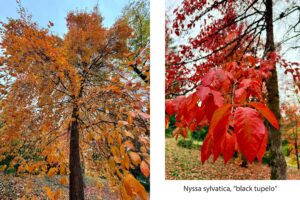
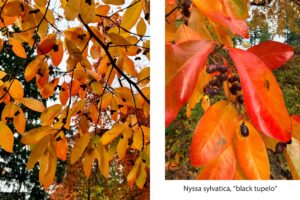
One of these tupelos in particular is laden with blue-black oval-like drupes.
October 21, 2025
We’re a little early reporting on Fall Color Watch this week, but it has been so beautiful, this update couldn’t wait! As of right now, we recommend exploring the geographic tree collection of Bristlecone Pine Trail for the best fall color at Hoyt Arboretum.
From the trailhead off Fischer Ln that begins the paved section of the trail, the view is already spectacular with native vine maples popping red in all directions.
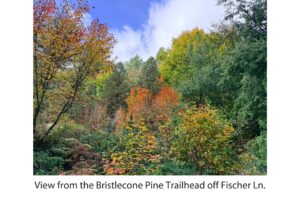
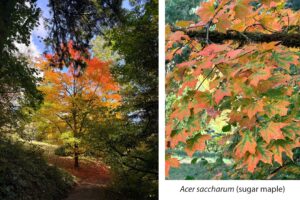
Following the paved trail past the New Zealand/Australian collection on the left and the monkey puzzle on the right, you’ll spot beautiful yellows, oranges, and reds through the tall evergreens. Keep following the trail around a bend to the right and you’ll spot some absolutely brilliant sugar maples (Acer saccharam).
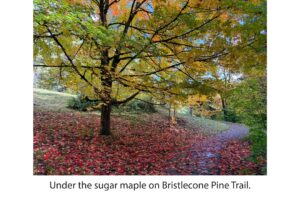
Continuing along the paved trail, there is a lovely paper birch (Betula papyrifera). Pause for a bench moment under this tree and observe the soft sound of the wind in the yellow leaves as they drift down around you.
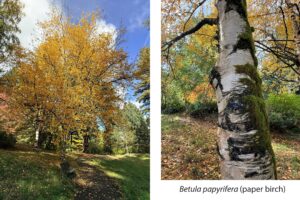
When you’re serene and ready, venture further down the trail and soon a brilliant display of yellows and oranges will come into view.
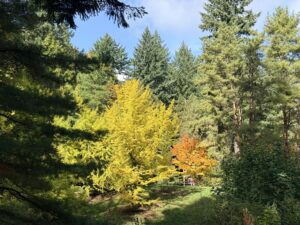
The Ginkgo Collection is in varying stages of turning saffron- the ginkgos in the open section of the hillside get more light and are more yellow, while the ginkgos closer to the trail and in more shade are still turning.
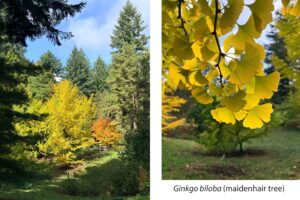
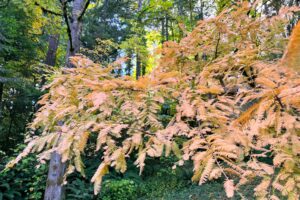
The dawn redwoods at the end of the trail are turning their rust-orange-red.
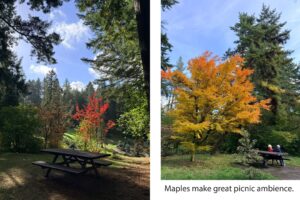
And of course, one of the best picnic spots in town, features the Ginkgo Grove and an absolutely breathtaking Japanese maple at the end of the Bristlecone Pine paved trail. Not hungry yet? Save your picnic spot for Stevens Pavilion on your way back toward the Visitor Center. There’s some fabulous fall color to dine around there too!
October 16, 2025
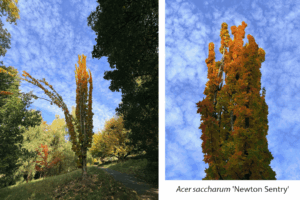
Fall Color is peaking in many places around the Arboretum! Native vine maples are absolutely gorgeous all over the trails, particularly along the upper trail of the Fir Loop in with the Pine Collection. But among the most significant signal of fall color at Hoyt Arboretum is Acer saccharum ‘Newton Sentry Maple’, along Maple Trail, which once you pass, you’re in the full splendor of fall!
Past the sentry maple and at the intersection of Hawthorn, Walnut, and Maple Trails, the Japanese Maple Collection is coloring very nicely. Particularly Acer palmatum ‘Atropurpureum’.
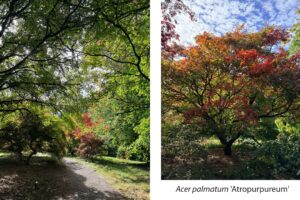
Back on Maple Trail and heading toward Overlook Trail, there is a lovely Betula alleghaniensis, “yellow birch”, worth a visit.
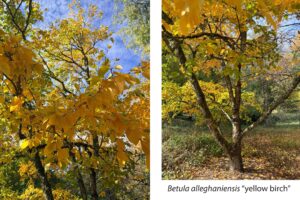
Taking the lower Overlook Trail path from this point, the Ash collection continues to develop in a beautiful array of yellows, oranges, and purples.
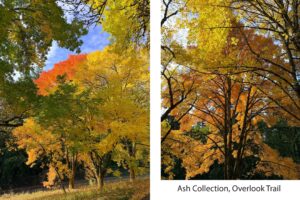
Following Overlook Trail, across Kingston Dr, and through the parking lot, the Vietnam Veteran’s Memorial of Oregon is in full splendor right now, with dogwoods in fall color.
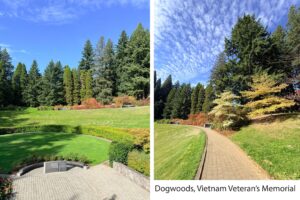
October 9, 2025
With beautiful sunny days and cool evening temps, fall color at Hoyt Arboretum is really developing this week. The ash collections are at their peak right now, and of particular interest is a planting of 3 Chinese ash (Fraxinus chinensis) on the hillside below Overlook Trail, and above Knights Blvd. As you head down the switchbacks of Overlook Trail, there will be pops of color and sweeping vistas to enjoy, and as you approach a connector trail with stairs leading to the grassy hillside, you’ll spot some bright color through the trees (see below).
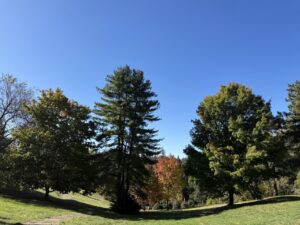
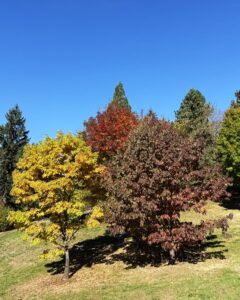
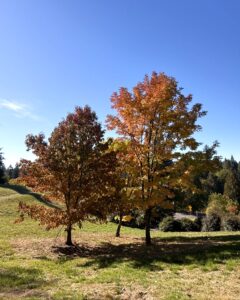
Follow the stairs and trail through the grass to reach this glorious planting. All three ash trees in this group are the same species, but you’ll notice that they are all different colors. This is likely because of its hillside location and circular planting arrangement. Each tree receives slightly different light and water, and is thus at a different stage of fall color change, even though they are so close to one another. The center of this planting is an exquisite place to enjoy fall color right now.
Heading back toward Overlook Trail, and in the direction of Hawthorn Trail, you’re sure to spot the bright red sumac (Rhus glabra) which is also at its peak fall color right now.
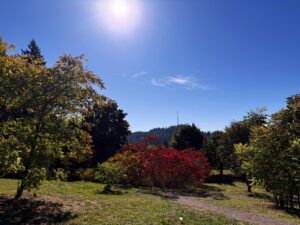
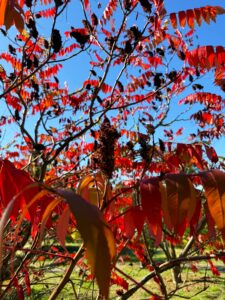
Following Hawthorn Trail Toward the intersection with Maple Trail, is Hoyt Arboretum’s collection of Japanese maples. These are not at peak color yet, but as the leaves change, this is beautiful spot to explore.
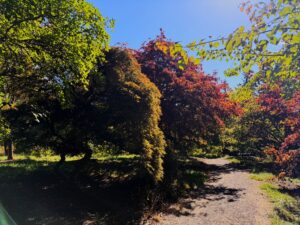
Acer japonicum ‘Aconitifolium’ is the Japanese Maple that is furthest along in fall color change right now. Get up close to see the pattern of red changing in their delicate green leaves.
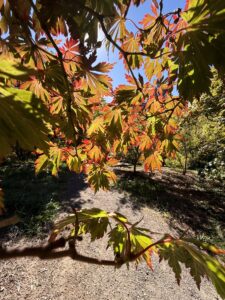
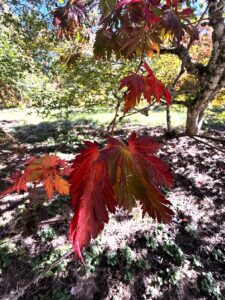
Maple Trail is yet to really develop fall color, and we expect peak color in that area to begin in about 10 days. The Acer saccharum ‘Newton Sentry Maple’ is just beginning to color at the top, and is a great way to track the progression of fall color in the Maple Collection at Hoyt Arboretum.
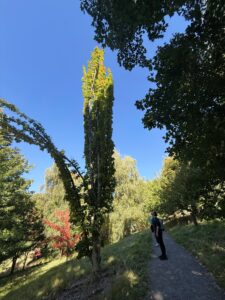
October 2, 2025
In the first Fall Color Watch of October, the reds and purples of fall leaves are still slow to develop. There are more pops of yellows and oranges throughout, and the early stages of the change can be found at many locations around the Visitor Center and along the trails.
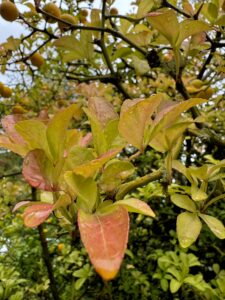
The entry point to the Arboretum for most visitors is the parking lot adjacent to the Visitor Center. As such, the shrubs and small trees selected for the buffer regions and bioswales in the asphalt have visual interest all year, but in fall, the “trifoliate oranges” steal the show.
Along Wildwood Trail heading toward the Vietnam Veteran’s of Oregon Memorial, the “amur cork trees” are showing lovely yellows, and continuing along the trail before Knights Blvd, the “quaking aspen” are yellowing nicely as well. And if a nice fall wind blows by, the sound of the leaves shaking on the branch provides a peaceful setting for mindfulness.
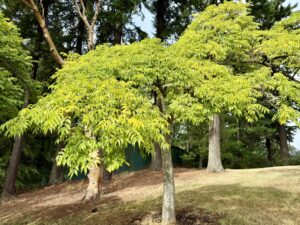
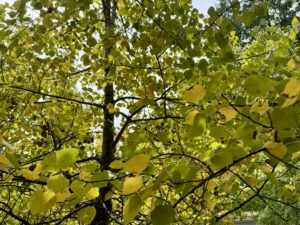
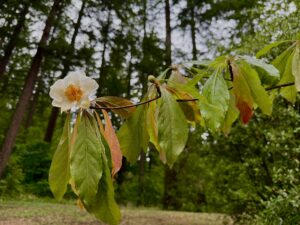
Crossing Knights Blvd, down the stairs, and keeping right on Wildwood Trail, there are yellowing walnut trees on the left, and to the right of the trail there are some rare and endangered Franklin trees.
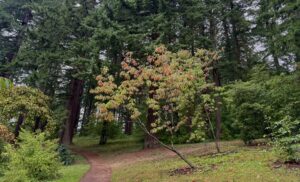
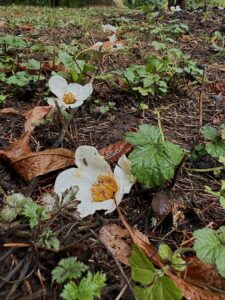
Franklinia alatamaha, only exists in captivity. Extinct in the wild, this species’ genetics stem from collection in the Alatahama River in Georgia back in 1803. Numerous expeditions to relocate the plant have failed, so ex situ conservation is this tree’s only chance for survival.
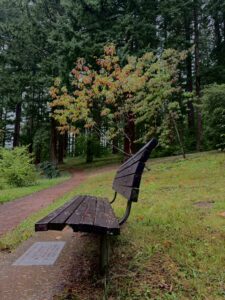
These trees show fall color and bloom at the same time, creating an absolutely gorgeous display. The bench next to these trees is a wonderful place in the Arboretum to appreciate fall this week.
September 25, 2025
We continue to be in early stages of fall color around Hoyt Arboretum. The Ash Collection that started to color last week is more vibrant yellow and the Overlook Trail continues to be a great place to explore.
This week, the ginkgo tree in the Visitor Center Courtyard is showing more saffron, though the Ginkgo Collection on Bristlecone Pine Trail is still pretty green.
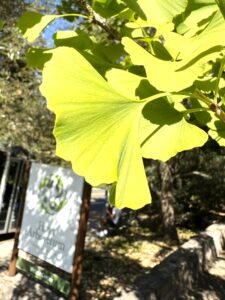
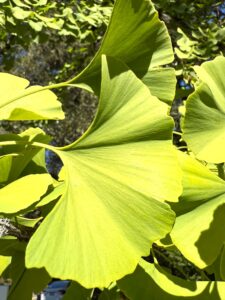
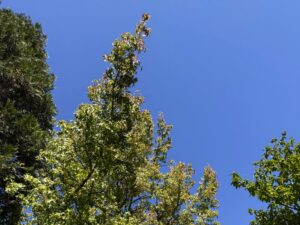
As you explore the Arboretum’s trails, you might notice that there are some flashes of orange and red on the higher branches of trees like sweetgums and maples. This occurs because the upper canopy is exposed to more sunlight, which speeds up the breakdown of chlorophyll (the green pigment in leaves), and triggers the production of anthocyanins (red and purple pigments), making color changes show up earlier at the top.
This is the sweetgum on Magnolia Trail, though you’ll see this happening on maple trail and particularly with the sugar maples of Bristlecone Pine Trail.
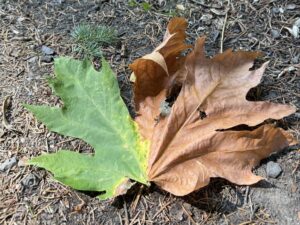
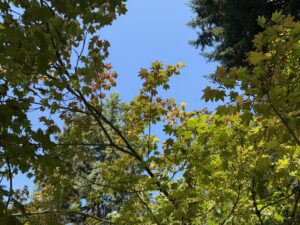
Otherwise the PNW native maples including bigleaf maple (left) and vine maple (right) are showing their fall color all over the Arboretum.
September 18, 2025
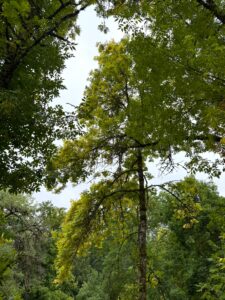
Vine maples are coloring up along all trails right now with notable oranges and reds near Stevens Pavilion and on Bristlecone Pine Trail near the European Beech Collection. These spots are especially nice to explore on sunny days when the scents of true firs is heavy in the air. But, the most notable fall color this week can be observed on the lower part of Overlook Trail.
The ash trees are yellowing in the upper part of the canopy.
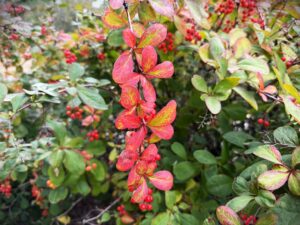
And, further down the path before reaching Knights Blvd there is an amazingly beautiful Korean barberry. The large shrubs are still laden with drooping red berries and surrounded by red-orange leaves.
September 11, 2025
With cool weather and overcast days, the Arboretum has been feeling a bit more like fall this week. It’s still early, and the trees are mostly green, but flashes of pink, orange, yellow, and red are starting to come through along the trails.
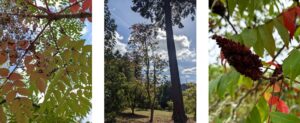
The most color this week can be found along Hawthorn Trail with a stop by the devils walking stick, sourwood, and sumac (left to right below).
Stay Up-To-Date with Hoyt Arboretum!
Subscribe to our email newsletter
AND